
Is Dental Sedation Safe for Kids? Nitrous Oxide & Laser Dentistry, Explained
Written & medically reviewed by Dr. Rajat Shaikh, MDS — Pediatric & Preventive Dentistry · Last updated August 2026
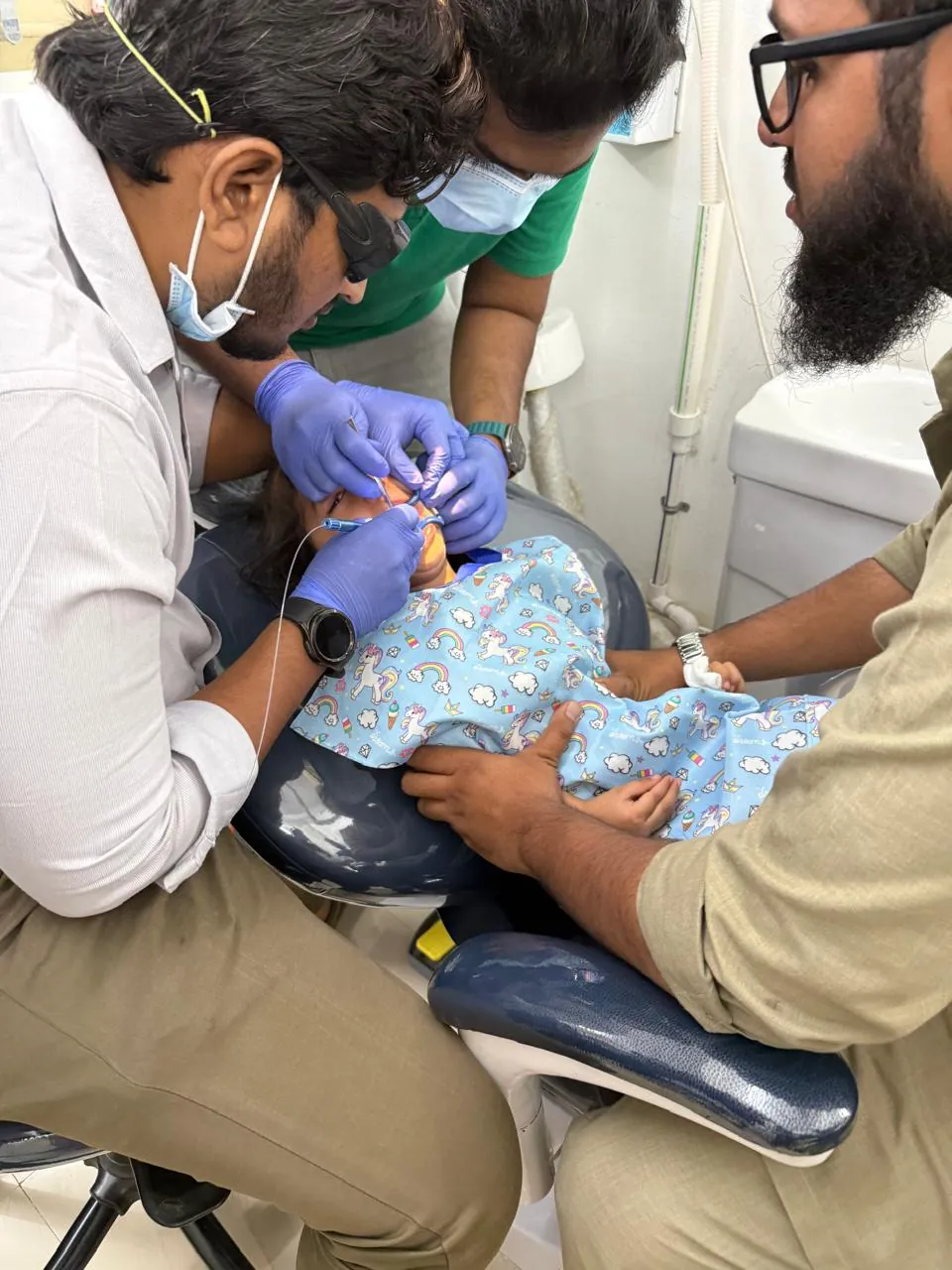
Yes — nitrous oxide (“laughing gas”) is the mildest and most-studied sedation in pediatric dentistry: your child stays awake, breathes it through a small mask, and its effects wear off within minutes of the mask coming off.
Few words worry parents like “sedation”. So let’s start with what pediatric sedation is not: it is not general anaesthesia, your child is not unconscious, and it is never a shortcut used for the dentist’s convenience. Used correctly, it is a safety tool — it turns a treatment that would be frightening and unmanageable into one that is calm, painless and quickly forgotten.
What conscious sedation actually is (and is not)
Conscious sedation keeps your child awake, responsive and breathing on their own — just relaxed enough that fear stops running the appointment. They can talk to us, follow instructions and tell us how they feel throughout. This is completely different from general anaesthesia, which puts a patient fully to sleep in a hospital setting and is reserved for a small minority of complex cases.
Nitrous oxide, step by step
Nitrous oxide — the “laughing gas” dentists have used for over a century — is the gentlest option and the one we reach for most. Your child breathes a mix of nitrous oxide and oxygen through a small, softly scented nose mask. Within a few minutes they feel floaty and giggly but fully awake. We monitor them continuously, adjust the mix at any moment, and at the end of treatment a few breaths of pure oxygen clear the gas — most children walk out as if nothing happened.
- Onset and recovery in minutes — no lingering drowsiness for most children
- Adjustable second-by-second and switched off instantly if not needed
- Decades of safety data in pediatric dentistry worldwide
- Your child stays awake and in control throughout
Laser dentistry: treatment without the drill
For many procedures we can skip the part children fear most. Dental lasers treat cavities and soft-tissue problems with no drill noise, less vibration and often no injection at all. Dr. Rajat uses laser dentistry routinely — including for tongue-tie treatment in infants — because it is precise, quieter and usually heals faster. For an anxious child, “no needle and no drill” changes everything.
Who should (and shouldn’t) be sedated
Honest answer: most children never need sedation at all. A patient pediatric dentist with good behaviour guidance gets the majority of kids through treatment happily with nothing more than distraction and encouragement. Sedation earns its place for very young children needing longer treatment, children with special healthcare needs, strong gag reflexes, or genuine dental phobia that gentle pacing alone cannot solve.
Sedation is also how we treat children who arrive in real pain — a deep cavity or an abscess can’t wait for weeks of slow introduction visits. If your child is hurting right now, our emergency kids’ dentist in Pune keeps same-day slots so treatment can begin gently, the very day you call.
How we decide at the check-up
No two children need the same approach — which is why sedation is never a walk-in decision. Dr. Rajat first meets your child at a relaxed examination, sees how they respond to the chair, and only then recommends nitrous oxide, laser treatment or simply a slower pace. The easiest first step is to book a pediatric dental check-up in Pune and let the plan grow from there.
Frequently asked questions
Is laughing gas safe for a 4-year-old?
Yes — nitrous oxide is considered the safest sedation option in pediatric dentistry and is used routinely for preschoolers. It is continuously monitored, adjusted in real time, and clears from the body within minutes.
Will my child be unconscious during sedation?
No. With conscious sedation your child stays awake, talks to us and breathes on their own — just calmer. Being fully asleep (general anaesthesia) is a hospital procedure reserved for rare, complex cases.
Does laser dental treatment hurt?
Most children feel less with a laser than with a drill — many soft-tissue and early-cavity treatments need no injection at all, and healing is usually faster.
Do I need to prepare my child for sedation?
We give simple instructions at the assessment visit — usually a light meal beforehand and a calm, positive framing of the “magic nose mask”. We handle the rest in the chair.
Ready for a healthier, happier smile?
Book a consultation with Pune’s family-friendly dental team in Mohamadwadi. New patients and children are always welcome.