
The Ultimate Guide to Pediatric & Family Dental Care in Pune
Written & medically reviewed by Dr. Rajat Shaikh, MDS — Pediatric & Preventive Dentistry · Last updated August 2026
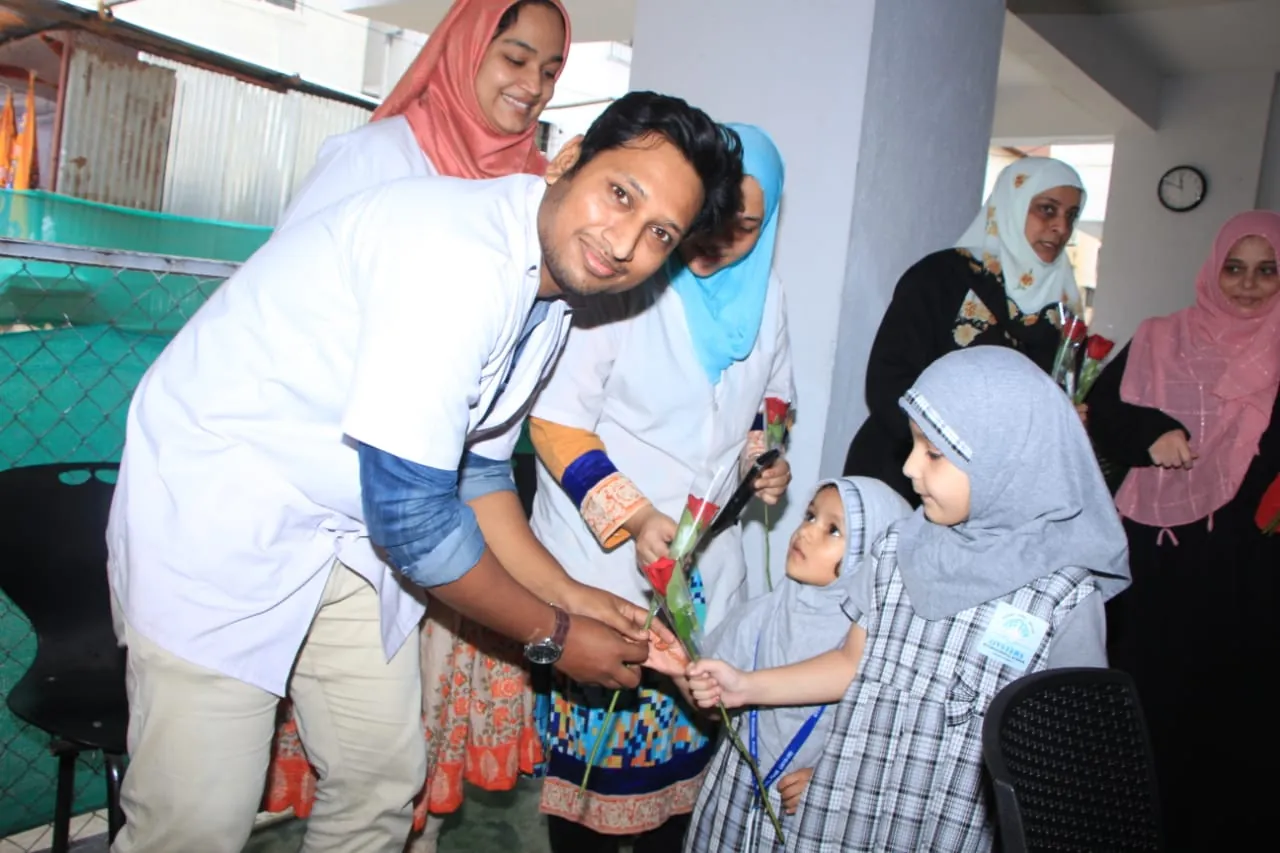
Pediatric and family dental care covers a child’s dental health from the first tooth through the teenage years and keeps the whole family under one clinic — starting with a first dental visit by the first birthday, check-ups every six months and an orthodontic assessment by age 7.
Most dental problems parents worry about — cavities in milk teeth, crooked bites, dental fear — are easiest to prevent when care starts early and stays regular. This guide answers the questions Pune parents actually search for, in one place: when to start, how often to go, what the popular “dental rules” really mean, which milestones matter and what treatment costs.
It is written and medically reviewed by Dr. Rajat Shaikh, MDS pediatric dentist and founder of Happy Tooth Children & Family Dental Care in Mohammed Wadi, Pune.
When should your child first see a dentist?
A child should see a dentist by their first birthday, or within six months of the first tooth appearing — whichever comes first. That is the guidance followed by pediatric dental associations worldwide, and it is when prevention works best: cavities can start as soon as teeth exist.
The golden rule: first tooth or first birthday
The first visit is short and gentle — a lap exam, a look at the gums and erupted teeth, and practical advice on brushing, teething, bottle habits and diet. No drills, no pressure. The goal is a healthy start and a child who thinks the dental clinic is a friendly place. Read what happens step by step in our guide to your child’s first dental visit.
Should a 2, 3 or 5 year old go to the dentist? (Age-by-age answers)
- At 2 or 2.5 years: yes — ideally your child has already been once. All 20 milk teeth usually arrive by now, and early-childhood cavities move fast.
- At 3 years: absolutely. Three-year-olds cope well with a friendly check-up, and any bottle- or thumb-habit effects can still be corrected easily.
- At 5 years: essential. The first permanent molars erupt around age 6, and we want them sealed and protected from day one.
- Never been yet? Start now — a first visit at any age is better than waiting for pain.
What is the “2 year dentist rule”?
Parents use this phrase two ways: the idea that every child should have seen a dentist by age two, and the idea that adults can stretch check-ups to every two years. The first is sound. The second is risky for most Indian families — sweetened chai, snacking habits and hard water make yearly or six-monthly checks the safer rhythm.
The dental “rules” every parent hears about — explained
Search results are full of numeric brushing rules. Here is what each one actually means — and what a pediatric specialist would fine-tune.
The 3-3-3 rule
Brush three times a day, for three minutes, roughly three hours apart (many versions say “within three minutes of eating”). It is a memorable habit-builder, though evidence supports something slightly different: two thorough fluoride brushings a day matter more than three rushed ones — and after acidic food or drink, wait about 30 minutes before brushing so softened enamel can recover.
The 2-2-2 rule
Brush two times a day, for two minutes, and see your dentist twice a year. This is the version most dentists — including our team — actually recommend for children and adults alike. It is simple, achievable and matches how quickly plaque and early decay develop.
The rule of 7 (orthodontics)
Every child should have a first orthodontic assessment by age 7. By then the first permanent molars and incisors have arrived, so an orthodontist can spot crowding, crossbites and jaw-growth issues while they are still simple to guide. Most 7-year-olds need no treatment — the check is about timing. Learn more in our guide to early orthodontics for kids.
The rule of 4 (baby-tooth arithmetic)
From around 7 months of age, roughly four new baby teeth erupt every four months — which is why most children have all 20 milk teeth by about two and a half. Our teething guide covers what those months feel like and how to soothe them.
How often should children go to the dentist?
Every six months is the standard for children — often enough to catch cavities while they are small, seal new molars on time and keep dental visits feeling routine rather than scary. Children with a history of cavities, braces, or high sugar exposure may be advised three-monthly recalls for a while.
Haven’t been in two or three years? Start fresh — no lectures
Life happens, and a long gap is never a reason to delay the next visit. A catch-up appointment is simply a thorough examination, X-rays if needed, a professional clean and a clear written plan for anything found. Problems caught at a catch-up visit are almost always smaller and cheaper than problems that announce themselves with pain. Book a check-up and cleaning and reset the clock — or, if you’d rather start today, schedule a pediatric check-up in one tap.
Your child’s tooth timeline: milestones from 0–14
When baby teeth come in
First tooth around 6–10 months, full set of 20 by about two and a half years — with wide, normal variation. Our detailed baby-teeth eruption timeline maps every tooth.
When kids lose the most teeth
Shedding happens in two waves: ages 6–8, when the front teeth loosen in quick succession (the “tooth fairy years”), and ages 10–12, when the back molars and canines follow. In between comes the mixed-dentition stage — the most important window for spotting crowding and bite problems early.
Braces at 7 — is that normal?
It can be. Most children who see an orthodontist at 7 simply get monitored, but a small group benefits from interceptive treatment — habit appliances, space maintainers or expanders — that guides jaw growth and often makes later braces or aligners shorter, simpler or unnecessary.
Pediatric dentist vs general dentist: what’s right for your family?
A pediatric dentist completes three extra years of MDS training focused entirely on children — behaviour guidance, growth and development, sedation and treatment techniques sized for small patients. For anxious kids, toddlers, and anything beyond a routine check-up, that specialist training shows.
Do pediatric dentists cost more?
Not meaningfully — a child’s check-up with a pediatric specialist costs about the same as a general check-up. Specialist care usually costs less over time, because problems are caught while they are small, and because a child who is not afraid of the dentist grows into an adult who never needs “rescue” dentistry.
When do children “graduate” from a pediatric dentist?
Pediatric dentists typically see children from infancy through the mid-to-late teens. At a family clinic the handover is seamless: the same clinic that sealed your child’s first molars can fit their aligners at 15 and their parent’s crown the same afternoon — nobody has to start over with a stranger.
How to choose well
Look for MDS qualifications, a genuinely child-friendly setup, painless techniques (including laser dentistry and sedation for anxious kids), transparent written estimates and verified reviews. We wrote a full checklist in how to choose a kids’ dentist.
What dental treatment costs in Pune: a parent’s honest guide
Every family asks, and every honest answer starts the same way: the cost depends on the treatment, the materials and the complexity of your case — which is why a trustworthy clinic always gives you a written estimate before starting. Here is what actually drives the price of common treatments.
| Treatment | What drives the cost | Where to read more |
|---|---|---|
| Check-up & cleaning | The simplest, lowest-cost visit — and the one that prevents the expensive ones | Check-ups & cleaning |
| Fillings | Cavity size and material (tooth-coloured composite vs others) | Cavities in children |
| Root canal (RCT) | Which tooth, infection complexity, and the crown that protects it afterwards | Root canal cost in Pune |
| Braces & aligners | Appliance type, case complexity and treatment length | Braces & aligner costs in Pune |
| Dental implants | Implant system, bone condition and the final crown | Implant costs in Pune |
Is a root canal worth it — or should the tooth just come out?
A root canal usually costs a fraction of what replacing an extracted tooth does, because an extraction is rarely the end of the spending — a missing tooth needs an implant or bridge to stop neighbouring teeth drifting. Saving the natural tooth is almost always the better investment. See the full comparison in root canal vs extraction.
Preparing your child (and yourself) for the visit
- Use easy, positive words: “counting teeth” and “tickling teeth clean” — never “pain”, “injection” or “it won’t hurt” (children hear only the scary word).
- Play pretend-dentist at home: count a toy’s teeth with a spoon, then let your child count yours.
- Time it well: mornings after a good sleep beat evenings after school.
- Stay relaxed yourself — children borrow their parents’ calm (and their nerves).
For genuinely anxious children we use gradual desensitisation, laser dentistry (often no injections at all) and, where appropriate, safe conscious sedation. Our guide to managing dental fear in children goes deeper, and every brave visitor leaves with a Certificate of Bravery.
Finding pediatric & family dental care near you in Pune
Happy Tooth Children & Family Dental Care is in Mohammed Wadi, South-East Pune — a short drive from Undri, NIBM Road, Kondhwa, Handewadi and Hadapsar. The clinic is led by two MDS specialists — a pediatric dentist and an orthodontist — with a consultant panel covering root canals, implants and oral surgery, so your whole family is cared for under one roof. Meet the full team, see real patient moments, or book a first visit — Monday to Saturday, 10 AM to 9 PM. For urgent problems, we keep same-day emergency appointments for children.
Frequently asked questions
At what age should kids first see a dentist?
By their first birthday, or within six months of the first tooth appearing — whichever comes first. Early visits prevent decay and build lifelong comfort with dental care.
How often should children go to the dentist?
Every six months for most children. Kids with previous cavities, braces or high sugar exposure may need three-monthly recalls for a while.
What is the 3-3-3 dental rule?
A habit rule: brush three times a day for three minutes. Dentists generally prefer the 2-2-2 version — two thorough fluoride brushings a day and two dental visits a year — and advise waiting 30 minutes after acidic food before brushing.
What is the rule of 7 in pediatric dentistry?
Every child should have a first orthodontic assessment by age 7, when the first permanent molars and incisors have erupted. Most need no treatment — the check is about catching jaw and bite issues while they are simple to guide.
At what age do kids lose the most teeth?
Between 6 and 8 years, when the front teeth shed in quick succession; a second wave follows at 10–12 when the back molars and canines loosen.
What is the cut-off age for a pediatric dentist?
Typically the mid-to-late teens. At a family clinic like Happy Tooth there is no real cut-off — teens transition seamlessly to the same clinic’s orthodontic and adult care.
Will a pediatric dentist see an adult?
Pediatric dentists specialise in children, but at a family dental clinic parents and grandparents are treated in the same place by the appropriate specialist — from cleanings to implants.
Is it bad to not go to the dentist for 3 years?
A three-year gap lets small, cheap problems grow into large, expensive ones — but it is never too late. A catch-up visit is just an exam, a clean and a written plan; book one and reset the clock.
Ready for a healthier, happier smile?
Book a consultation with Pune’s family-friendly dental team in Mohamadwadi. New patients and children are always welcome.