
A Root Canal in a Milk Tooth? Why Baby Teeth Sometimes Need Saving
Written & medically reviewed by Dr. Rajat Shaikh, MDS — Pediatric & Preventive Dentistry · Last updated August 2026
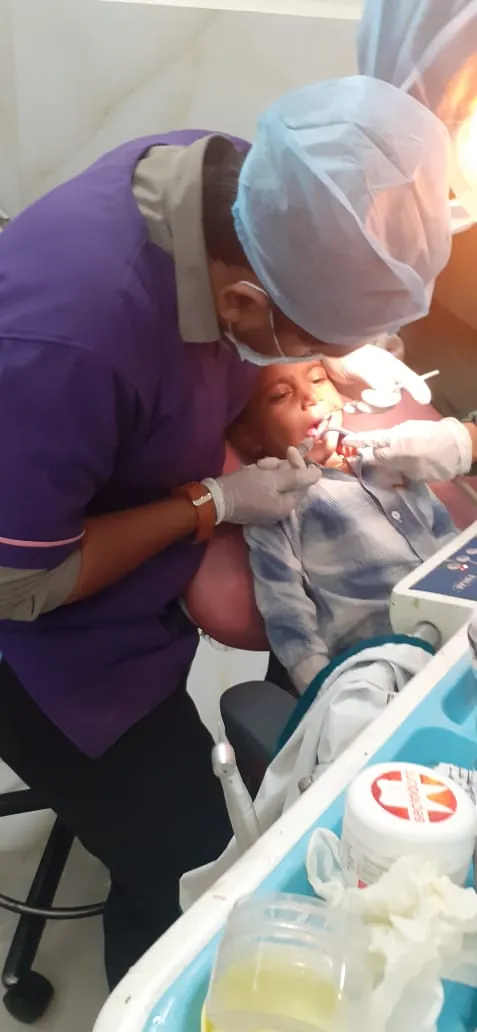
A pulpectomy is a root canal for a milk tooth: the infected nerve is painlessly removed, the tooth is filled with a material that resorbs naturally, and a small crown protects it — saving the tooth until it is ready to fall out on its own and preserving the space your child’s permanent tooth needs.
It is the most reasonable question a parent asks in our consultation room: “The tooth is going to fall out anyway — why on earth would we do a root canal on it?” Here is the honest, complete answer.
Why not just pull it out?
Milk teeth are placeholders with a job. Each one reserves the exact spot where a permanent tooth will erupt years later — and guides it in. Pull a milk molar early and the neighbouring teeth drift into the gap within months; the permanent tooth then erupts crooked, blocked or crowded, and what was a one-visit problem becomes years of braces. When a tooth must be removed early, we place a space maintainer — but keeping the natural tooth is almost always the better outcome for chewing, speech and alignment.
Pulpotomy vs pulpectomy, in plain words
Both treat infection inside a milk tooth. A pulpotomy removes only the infected top portion of the nerve when the roots are still healthy — think of it as a partial rescue. A pulpectomy goes further, cleaning the full root canals when infection has spread deeper. The filling material is designed to resorb along with the roots, so the tooth still falls out naturally, right on schedule.
What happens during the procedure
- Numbing first — the tooth is fully asleep before anything else happens; anxious children can have nitrous-oxide sedation
- The dentist removes the infected nerve tissue and cleans the canals — your child feels pressure, not pain
- The tooth is filled with a child-safe, resorbable material
- A small crown caps the tooth so it survives chewing until it falls out naturally
The whole visit is usually shorter than a school period, and a treated tooth behaves like any other — your child eats, plays and loses it on nature’s timetable.
Signs your child may need one
Two signs should never wait for a routine appointment: a child woken by tooth pain at night, and a small pimple-like swelling on the gum — both usually mean infection has reached the nerve. In either case, call our emergency kids’ dentist in Pune the same day; treating an abscessed milk tooth early is quick, and waiting only makes it harder on your child.
- Toothache that wakes your child at night or lingers after the trigger is gone
- A gum “pimple” or swelling near a tooth — often painless, always serious
- Pain on chewing, or a tooth that has turned grey or dark
- Sensitivity that lasts minutes, not seconds, after hot or cold food
Catch it before it hurts
Here’s the honest ending to every pulpectomy story: it started as a small cavity that nobody saw. Six-monthly visits catch decay while it’s still a ten-minute filling — or better, while it’s still reversible. If it’s been a while, book a pediatric dental check-up in Pune this week and let’s keep your child’s teeth in the boring, painless category.
Frequently asked questions
Is a pulpectomy painful for a child?
No — the tooth is fully numbed first, and anxious children can have nitrous-oxide sedation. Most children describe pressure and a strange noise, not pain, and the toothache they came in with is gone afterwards.
How long does a treated milk tooth last?
Until it is naturally ready to fall out. The filling material resorbs along with the roots, so the tooth exfoliates on its normal schedule and the permanent tooth erupts as planned.
Why not wait and see if the pain settles?
Nerve infections in milk teeth do not heal on their own — pain that “settles” usually means the nerve has died, while the infection continues silently and can damage the permanent tooth developing underneath.
Related treatments
Related reading
Ready for a healthier, happier smile?
Book a consultation with Pune’s family-friendly dental team in Mohamadwadi. New patients and children are always welcome.